Casinos rely on the law of independent trials. This means each game outcome is statistically random. It helps them make huge profits from unaware customers. Every casino game seems random. This means you can’t predict what will happen next. Casinos depend on their house edge, which guarantees they make a profit over time. This advantage depends on players making fixed bets. It also assumes that all game factors remain unchanged.
But what if there were a mathematical concept that challenged this assumption? Chaos Theory is a part of probability math. It shows how hidden patterns can appear in events that seem random.
22Bet and other online casinos believe each spin, deal, or roll is independent. But Chaos Theory asks if gamblers can spot trends or oddities in gameplay. These could shake up the house’s edge. Grasping this idea can offer gamblers a fresh perspective on strategic betting. This is especially true for strategic games like blackjack and roulette.
While the math behind Chaos Theory is complex, you don’t need to be a genius to see how it applies to gambling. This article will break it down into simple ways players can use it to improve their betting strategies.
Chaos Theory in Blackjack: Can Randomness Be Predicted?
Blackjack is a good first example. Its system relies on dependence, not on independent trials. For example, when an Ace is dealt in blackjack, one less is in the deck. This change affects future hands. This contrasts with games that use true randomness, such as roulette. Blackjack is a fast-paced game. The cards played in earlier hands influence future ones. Each card that enters play shifts the house edge slightly. When the right cards are dealt, players can gain an edge. They can do this by raising their bets. This strategy is obvious in blackjack, yet you can spot similar chances in other casino games. Chaos Theory shows that tiny changes can cause big results. Roulette is a great example of this.
Chaos Theory in Roulette: Finding Patterns in Randomness
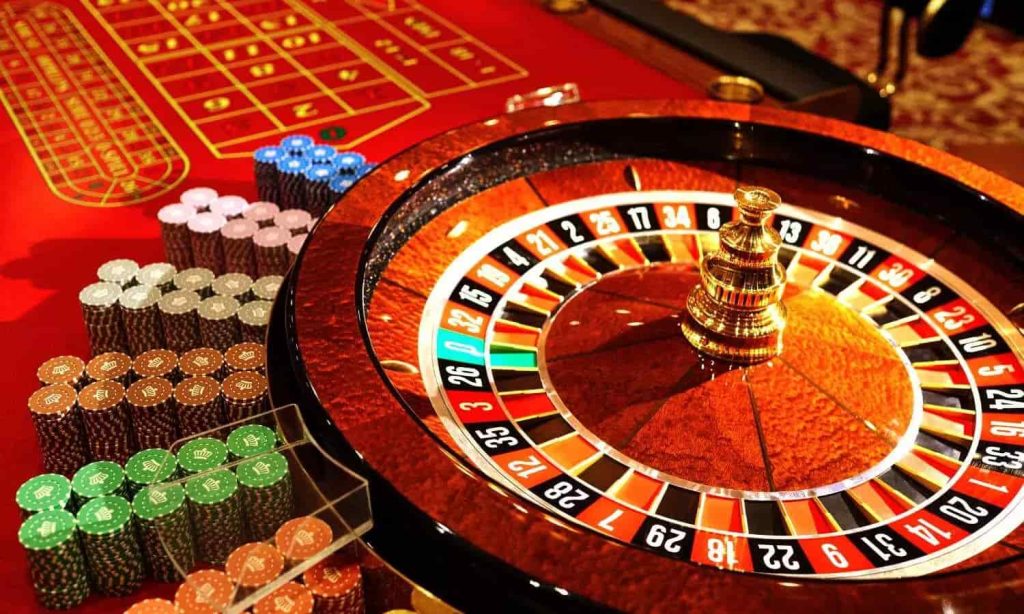
An American roulette wheel has 38 numbered pockets, including 1-36, plus 0 and 00. In a perfect model, each number should appear once every 38 spins if nothing changes. This is not the case. The wheel inevitably experiences wear and tear. Casino conditions change. Humidity varies during the day, and the wheel’s temperature depends on how many players are in the room. These differences may appear minor to casual players. Still, Chaos Theory shows that small changes can create big shifts in results. There’s no quick method to uncover a roulette wheel’s bias. The only way to find problems is by collecting a lot of data. We need at least 50,000 recorded spins for each wheel. This will help us spot any unusual patterns.
Not every roulette wheel has a bias, so it’s best to track data from many wheels simultaneously. Track spin results in a spreadsheet. Then, see if any numbers show up more than expected. A number appearing more frequently than 1 in 36 may indicate a positive expectation game.
Challenges:
- Collecting data takes months and requires at least 50,000 spins per wheel.
- Even after finding a biased wheel, casinos can swap out wheels, making your data useless.
The Reward: If you spot a strong bias (1 in 25 or more), you can boost profits by betting on certain numbers, colors, or ranges. Though it takes time, this strategy can turn roulette into a profitable game.
Final Thoughts
Online data tracking can help detect subtle biases in random number generators (RNGs). Minor biases are present in almost all RNGs. Yet, you only see them after hundreds of thousands of spins. Chaos Theory helps in understanding patterns in online Baccarat. It doesn’t work for traditional table games, as those decks are reshuffled after each round. This is because casinos only use the Baccarat cards once before discarding them.
About the Author